You spend lakhs on interiors. But one wrong plywood choice can make cabinets swell, wardrobes bend and kitchen storage lose its finish much earlier than expected
That’s why one question keeps coming up before starting interior work
Marine plywood vs commercial plywood for home interiors: which one should you choose?
Many homeowners think marine plywood is always the premium choice and commercial plywood is only the cheaper option.
That’s not true.
For Kerala homes, the better option depends on where the plywood is used, moisture exposure, expected life and budget.
This guide explains marine plywood vs commercial plywood for home interiors, where each one works best, and what you should check before buying, especially if you’re building a home in Kerala’s humid climate.
If you need a short answer
● Choose marine plywood for kitchens, utility spaces and moisture prone areas.
● Choose commercial plywood for wardrobes, bedrooms and living room furniture.
The best interiors usually combine both instead of using only one.
Marine plywood is a premium grade plywood designed for environments where moisture resistance is important. It is manufactured using carefully selected high-quality veneers with minimal core gaps and bonded with BWP (Boiling Waterproof) adhesive, which provides excellent resistance to water penetration.
In India, genuine marine plywood is manufactured according to IS 710, the Bureau of Indian Standards specification for marine grade plywood. Many reputed manufacturers also provide preservative treatment to improve resistance against termites and borers. Always verify the manufacturer’s specifications and certifications before purchasing.
Marine plywood is often called waterproof plywood in the market, but no plywood should be considered completely waterproof during prolonged water exposure. Proper installation, edge sealing and surface finishing are equally important for long term performance.
Its biggest advantage is long term durability in challenging environments where ordinary plywood may deteriorate faster.
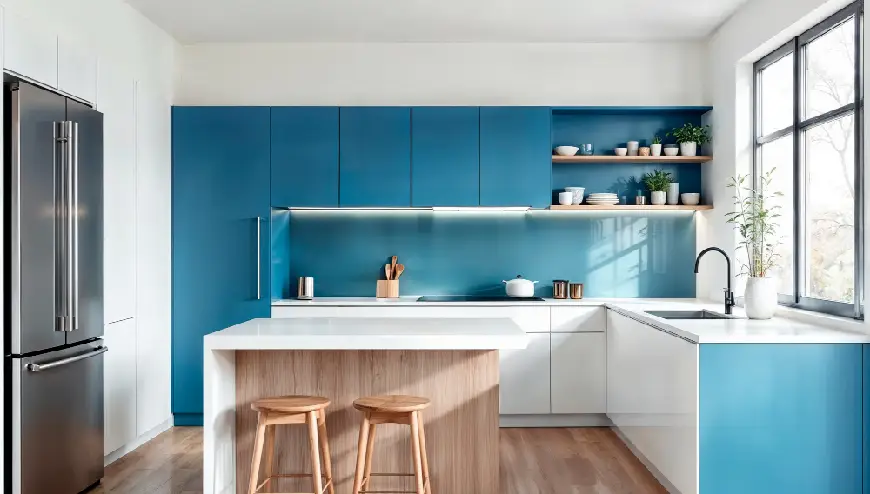
Commercial plywood is designed for general indoor furniture used in dry conditions. It is manufactured using MR (Moisture Resistant) adhesive and follows the IS 303 standard for interior applications.
Despite its name, commercial plywood is widely used in residential homes. It performs well in bedrooms, living rooms and offices where furniture is not regularly exposed to moisture.
However, it should not be considered suitable for areas that experience continuous moisture exposure, such as sink cabinets or bathroom storage.
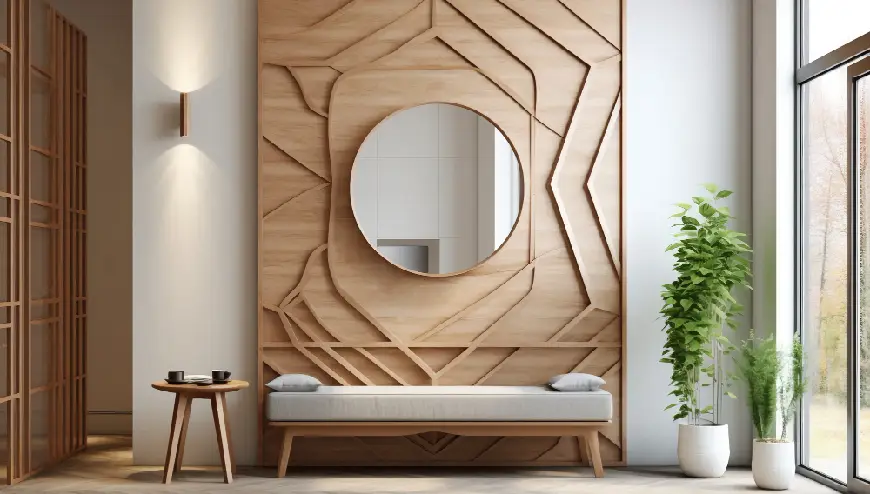
Many homeowners compare only marine plywood and commercial plywood, but BWR (Boiling Water Resistant) plywood is another option worth considering.
BWR plywood offers better moisture resistance than commercial plywood but is generally more affordable than marine plywood. It is manufactured broadly under the same IS 303 framework as commercial plywood, but uses BWR-grade adhesive instead of MR adhesive, which is what gives it improved moisture performance. It is commonly selected for kitchens where moderate moisture resistance is sufficient without paying the premium cost of marine plywood.
Choosing between commercial, BWR and marine plywood depends on your budget and how demanding the application is.
The adhesive used in plywood determines how well it resists moisture.
● MR (Moisture Resistant): It can handle occasional humidity but is not designed for areas with frequent water exposure.
● BWR (Boiling Water Resistant): Offers better moisture resistance than MR plywood, making it a good choice where occasional water contact is expected.
● BWP (Boiling Waterproof): Used in marine plywood, BWP adhesive provides the highest level of water resistance among these three grades.
Tip: Adhesive grade refers to the glue used to bond the plywood layers. It is one of the most important factors affecting the plywood’s performance in humid or wet conditions.
| Feature | Marine Plywood | Commercial Plywood |
|---|---|---|
| Indian Standard | IS 710 | IS 303 |
| Adhesive | BWP (Boiling Waterproof) | MR (Moisture Resistant) |
| Moisture Resistance | Excellent | Moderate |
| Suitable for Humid Areas | Yes | Limited |
| Durability | High: built to perform for years even under repeated humidity and moisture cycles | Good: reliable for years in dry, stable indoor conditions, but not built to withstand repeated moisture exposure |
| Typical Applications | Kitchens, utility rooms, bathroom cabinets | Wardrobes, bedrooms, TV units |
| Cost | Higher | More affordable |
Marine plywood works better for furniture exposed to moisture. It offers superior water resistance and long term durability. Commercial plywood works better for dry indoor furniture where moisture isn’t a concern, and it costs less.
The better plywood isn’t the more expensive one. It’s the one that matches your application.
Instead of asking “Which plywood is more expensive ” ask “Which plywood is right for this room?” Kerala’s tropical climate makes this decision even more important. High humidity, heavy monsoon rains and seasonal moisture can damage furniture built with the wrong material.
Match the plywood to the conditions each room faces, instead of using marine plywood everywhere.
| Area | Recommended Plywood |
| Kitchen cabinets | Marine plywood or BWR plywood |
| Utility area | Marine plywood |
| Bathroom storage | Marine plywood |
| Wardrobes | Commercial plywood |
| Bedroom furniture | Commercial plywood |
| TV unit | Commercial plywood |
This approach gives you better durability where it matters, without unnecessary cost in dry indoor spaces. For most homes, using marine plywood only where moisture is a concern and commercial plywood everywhere else is the smartest investment.
Choosing the right material for each space gives you better value and helps to control your interior budget. Always compare products of the same thickness and verify their IS certification before buying.
Choosing the correct plywood type is important, but selecting the right thickness also affects the strength and lifespan of your furniture.
| Application | Recommended Thickness |
| Kitchen cabinets | 19 mm |
| Wardrobes | 19 mm |
| Shelves | 16–19 mm |
| TV units | 16–19 mm |
| Drawer bottoms | 6–9 mm |
Your carpenter or interior designer may recommend different thicknesses based on the furniture design and load requirements.
Before making your final purchase, compare these important factors
● Verify the IS certification: IS 710 for marine plywood and IS 303 for commercial plywood.
● Check whether the plywood uses MR, BWR or BWP adhesive, depending on where it will be installed.
● Ensure the plywood has a uniform thickness and a smooth, defect free surface.
● Ask about the core quality and choose plywood manufactured with minimal internal gaps.
● Check whether the manufacturer provides a warranty.
● Ask specifically whether termite/borer preservative treatment is included, rather than assuming it is.
Buy from a trusted plywood supplier in Kerala who can explain the product specifications and recommend the right plywood for your application.
Varna Group supplies plywood from leading brands such as CenturyPly, Greenply, Trojan, Action TESA and Mikasa, giving you certified options across marine, BWR and commercial grades under one roof.
Spending a few minutes checking these details before buying can help you to avoid costly repairs or replacements in the future.
Not in every situation. Marine plywood performs better in moisture prone areas, while commercial plywood offers better value for furniture used in dry indoor spaces. The best choice depends on where the plywood will be installed.
Commercial plywood can be used in dry sections of a kitchen. However, for cabinets near sinks or areas exposed to frequent moisture, marine plywood or BWR plywood is usually a better choice.
Not as good, but close enough for most kitchens. Marine plywood handles water better overall. BWR is fine if the area only gets occasional splashes, not standing water and better than commercial plywood.
Check whether the plywood complies with IS 710, verify the manufacturer’s specifications and purchase from a trusted supplier. Also, confirm the adhesive grade and warranty before buying.

 Rahmaniya Building Door No. XV/596, Ottupara,
Wadakkanchery. P.O, Thrissur, Kerala - 680582




© 2026 Varna Group. All Rights Reserved.